



In the Cockpit with Rémy: From Tennis Court to Phone Line
Before Rémy Van Haver started his sales career, he was on the tennis court. At sixteen, he coached adults. That was not obvious. “They looked at me as if I was their son. Until I stepped onto the court, played ten points, and won. Then I got respect,” he says. “That moment taught me that if you want to be convincing, you have to show it yourself first. Don’t talk, just do.”
Today, Rémy applies this principle as a sales coach at “Sales with Insight.” His career took him from Pepperminds, where he led a team of ninety students, to Salesforce in Dublin, and then to coaching and training in Belgium.
The Rotten Apple and the Power of Patience
Rémy likes to compare client development to a fruit bowl. “Everyone has their thoughts: finance, HR, sales, but often there’s no apple named ‘coaching’ yet. By staying visible via videos, LinkedIn, or a phone call, you place that apple there yourself. At first they ignore it, but over time it starts to ferment. You influence their mindset.”
Research shows prospects need multiple touchpoints before taking action (Kahneman & Tversky, 1979). That captures his approach: no shortcuts, but rhythm and presence.
“You don’t have to convince anyone in a single conversation. You just have to show up often enough not to be forgotten.”
From Video to Connection
His favorite medium is video—not commercials, but short, spontaneous messages with humor.
“Recently I was literally in bed with a cap on because I had a cold. But it worked. People felt it was real.”
He recalls a specific video to a CEO: “I just said: I’m not applying for a job, but I saw you offer training. Do you do that internally or externally? No script, just human. Four videos, four responses. That’s proof enough.”
Research confirms that multichannel prospecting — video, LinkedIn, and calling — significantly increases engagement (Sopro, 2025). Rémy’s approach combines reach with reliability.
Cold Calling Isn’t Dead, It’s Got Smarter
“At Salesforce, I did deep freeze calling,” he says. “Lists of fifty companies a day, five contacts per company, just calling. It worked because you had the Salesforce name behind you. But now I do it differently. I never call without a reason.”
He calls his method proactive calling: first connect on LinkedIn, then a video, then the phone. “You’re no longer a stranger. It’s not a cold call but a warm conversation.”
EQ Off, Perseverance On
“People with lots of empathy often stop too early,” he says. “They feel the other person is busy and think: I’ll leave them alone. But sales sometimes requires you to park your EQ for a moment.”
His golden rule: if someone says they’ll call back and doesn’t, that’s no reason to stop.
“Call again on Thursday. Send a message on Friday. Call again on Tuesday. Not to push, but to show you mean it.”
Studies show it takes around eight attempts to reach a prospect, and eighty percent of prospects say “no” four times before they say “yes” (Resimpli, 2025). Rémy’s strength is knowing this—then persevering.
The Generation Gap and the Power of a Meme
“My generation communicates differently,” he says. “We send voice notes, memes, or just a ‘haha’ without context. It may seem airy, but it connects.”
He also uses humor in prospecting. “After three days without a reply I sometimes send a meme of Pablo Escobar staring into space. No text. Usually I get a laugh and a reply. It doesn’t work for everyone, but when it fits, it’s gold.”
Research shows Gen Z doesn’t shy away from calling. While 61% prefer text for personal contact, 71% say calling is still the fastest, most effective way to solve business problems (McKinsey, 2024).
LinkedIn as a Training Ground
Rémy posts weekly on LinkedIn—not just for visibility, but to train rhythm.
“At first, I let AI write my content. But it felt cold. Now I type everything myself, from experience. It’s more human and my reach grows.”
Recently he received a message: “Hey, saw your post — funny, by the way — can we talk?” Not a cold lead, but a warm opening.
In an era of AI content, audiences crave authenticity. By sharing human stories and vulnerability, Rémy builds trust even before the first conversation.
The Power of Coaching and Fun
What does he love most? “Helping people rediscover the fun in prospecting. Not fear, but play. We call together, laugh at mistakes, improve along the way. Sales isn’t an exam. It’s a game you learn from in every call.”
The link with tennis is obvious. “I don’t teach people how to win, but how to play better. Rally after rally, point after point. That’s also true for developing new customers.”
What We Can Learn From Rémy
- The phone is alive if you use it smartly. Gen Z does call — with context. First connect, then call.
- Use multiple channels. Video, LinkedIn, and calling reinforce each other. Combine for faster recognition and recall.
- Perseverance beats perfect timing. Most sellers stop too soon. Relevant, repeated presence makes the difference.
- Authenticity beats perfection. A cap, a cough, a smile — it makes you human. Do what suits you. That builds trust and joy.
- See sales as a game, not a test. Every call is practice. Mistakes happen. Those who learn to play, keep growing.
- Blend old and new. Modern tools help, but the core is human contact, listening, and persistence.
Conclusion
Rémy Van Haver embodies the new generation of sales professionals rewriting the rules without abandoning the foundation.
PS: If you ever get a Pablo Escobar meme in your inbox, you’ll know: you’re in Rémy’s fruit bowl. And that’s a good sign.
References
- Abstraktmg. (2025). What You Need to Know About Multi Channel Prospecting. abstraktmg.com
- British Council. (2024). Gen Z in the Workplace… corporate.britishcouncil.org
- Cognism. (2024). The State of Cold Calling in 2024. cognism.com
- Kahneman, D., & Tversky, A. (1979). Prospect Theory…
- McKinsey (2024). Why Your Kids Aren’t Calling You… mckinsey.com
- Resimpli. (2025). 65 Cold Calling Statistics… resimpli.com
- Salesmate. (2024). Is Cold Calling Dead… salesmate.io
- Sopro. (2025). The Ultimate Guide to Multi Channel Prospecting. sopro.io

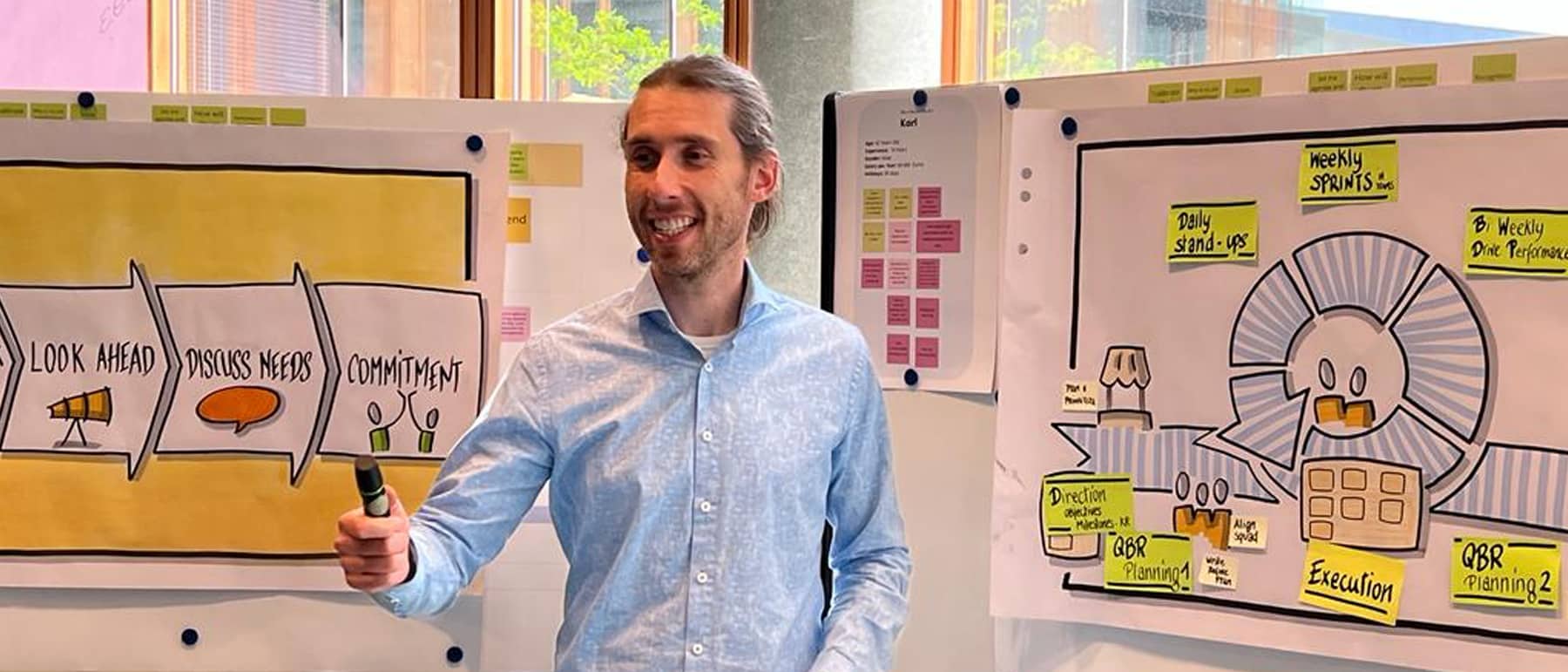
Cockpit Conversation with Koen De Keersmaecker
Images for Moments that Matter
That’s what I discussed with Koen De Keersmaecker, visual facilitator and founder of Bizzuals. He guides teams through those crucial moments when words fall short—when what really matters is clarity, connection, and shared understanding. Visualization strengthens that shared understanding and accelerates decision-making (Eppler & Platts, 2009).
“Drawing,” says Koen, “helps to make clear what we’re actually talking about. In the end, everyone understands what was said. Because as you draw, you see it—and that changes everything.” This process works as a boundary object—a bridge connecting different perspectives within teams (Star & Griesemer, 1989).
Images in conversations that matter
Koen often works with leaders trapped in abstract language. “We talk about ‘strategy,’ ‘change,’ ‘culture,’ but nobody draws what that means,” he says. “And then you notice the conversation stays vague.”
As soon as you draw it or use an image, you see where things go wrong. Everyone looks at the same sheet—and literally, we get on the same page. This is a practical example of how visualization enhances alignment and collaboration (Morgan & Liker, 2006).
That’s what visualization does: it doesn’t beautify—it clarifies.
He uses visualisation for the conversations that count:
- when starting change programs where alignment is missing (Morgan & Liker, 2006),
- during projects where coordination falters,
- and in strategic or commercial meetings where decisions are made.
“Whether it’s with teams, boards, or clients, the power lies in looking together—not just talking.”
Bikablo and Obeya: structured clarity
Koen is a certified Bikablo trainer, a globally recognized method for visual communication. “Bikablo isn’t an art course,” he explains. “It’s a visual language you learn to speak. You use simple patterns, symbols, frames. They bring structure so everyone understands. It’s not about talent—it’s about technique and attention.” Structuring shared visual information makes change more efficient and helps insights stick (Mascitelli, 2020).
He also works with the Obeya concept—literally “big room” in Japanese—a physical or virtual space where everything connects: strategy, obstacles, progress. “In an Obeya, you see the whole picture. The walls tell the team’s story. People see where they stand, what others are working on, and what’s missing. That openness creates a culture of shared responsibility.”
From drawing to meaning
“Drawing is thinking,” says Koen. “But it’s also listening. When I draw during a conversation, you can feel the energy shift. People lean in, correct each other, add things. The image becomes common ground. And that sticks much longer than words.”
Participatory visualization creates strong shared ownership and group memory (Savioja et al., 2014).
His approach is radically participative. “I never draw for people; I draw with people. That way, insight doesn’t emerge afterward in a report—it happens during the conversation itself.”
The poster in the kitchen
Koen smiles when he repeats the phrase: “The poster in the kitchen—that’s proof of impact for me. It’s still hanging there weeks later. Everyone who walks in recognizes the story. New colleagues instantly get what’s going on. Then I know: this worked.”
He stresses that visualizations aren’t temporary. “Reports disappear into folders. But drawings stay alive. They invite. They provoke. They’re both conversation starters and agreements in one.” That’s exactly what makes visual tools so powerful for lasting organizational change (Star & Griesemer, 1989).
Stickers, symbols, and the language of images
Not every moment allows time to draw. “Sometimes the context doesn’t fit, or there’s no time,” Koen admits. “Then I work with prepared visual elements—stickers, symbols, icons—to still make the conversation visual. You put them on the table, move them around, combine them. That’s also visualization.”
He emphasizes that this way of working isn’t casual. “‘Quick and dirty’ doesn’t exist in my world. Either you learn to draw—for instance through Bikablo—or you work carefully with well-designed visual tools. Because those symbols mean something—they help thinking. You use them during the conversation to build shared understanding together.”
That precision, he says, is what makes the difference. “Visualization isn’t improvisation. It’s focus. You rearrange words until meaning becomes visible.”
From moment to momentum
According to Koen, visualization works not only during workshops but especially at the right moment. “It’s all about those moments that matter—decisive meetings, stalled change processes, teams that don’t understand each other. Those are tipping points. When you visualize there, you turn a single moment into momentum.”
He sees it every day. “After one session people say, ‘Now I see it.’ And that’s often literally true—they see for the first time where the problem lies, why the direction is off, or which step is missing.”
Visualization as a continuous compass
For Koen, a good image is more than a drawing—it’s a continuous reference point. “An organization needs a visual memory. That prevents having the same discussions over and over again. A good image is an anchor; it reminds people why they do what they do.” Visual models demonstrably act as a shared organizational memory (Eppler & Platts, 2009).
In his Imagineering Lab at Bizzuals, he brings people physically together around those images. “The walls hold stories, systems, strategies. We make it visible. When something is complex, we shouldn’t talk it out—we should show it.”
Lessons from the cockpit
The conversation with Koen struck a chord. At Add Business, I’ve worked for years with visualization in client conversations that matter. Together with Stefaan Ooms from Toughcrowd, I develop pitch visuals—simple, powerful images that make complex value tangible, often starting from a sketch.
But where we visualize at the moment of the client dialogue—the moment of truth—Koen starts one step earlier. He visualizes internally, before the first client is even approached. And he teaches it to the users themselves.
His method helps organizations prepare for those key moments—so conversations, meetings, and transitions become clear, efficient, and human. We meet in the same mission: to move beyond words. To create images of what matters—so that the essence doesn’t get lost in abstraction, but takes shape, literally and figuratively.
About Koen De Keersmaecker
Koen is a visual facilitator, trainer, and coach at Bizzuals, specializing in Business Agility, Lean Startup, and Design Thinking. As a certified Bikablo trainer and Obeya coach, he helps organizations bring clarity to transitions, strategies, and collaboration.
More about his work: bizzuals.com or bikablo.com or hello@bizzuals.com
References
- Eppler, M. J., & Platts, K. W. (2009). Visual representations in knowledge management: framework and cases. Journal of Knowledge Management, 13(6), 112–123.
- Mascitelli, R. (2020). Mastering Lean Product Development: A Practical, Event-Driven Process for Maximizing Speed, Profits, and Quality. Technology Perspectives.
- Morgan, J., & Liker, J. K. (2006). The Toyota Product Development System: Integrating People, Process, and Technology. Productivity Press.
- Savioja, P., Koskinen, H., & Lehtonen, T. (2014). Shared visualizations in participatory workplace design. CoDesign, 10(2), 120–135.
- Star, S. L., & Griesemer, J. R. (1989). Institutional ecology, ‘translations,’ and boundary objects: Amateurs and professionals in Berkeley’s Museum of Vertebrate Zoology, 1907–39. Social Studies of Science, 19(3), 387–420.

On attention, trust, and the art of leadership
Learning to see without certainties
During the Etion event at the Royal Museum of Fine Arts Antwerp, art, leadership, and humanity came together in a remarkable way. No management jargon, no frameworks or PowerPoints — just two voices speaking from experience, vulnerability, and conviction.
Carmen Willems, director of the KMSKA, shared the long journey toward the museum’s reopening — a process filled with delays, uncertainties, and expectations. “You have to be able to see it before it exists,” she said. Not only about the building, but about the people who make it real. About trust that has no proof yet. About the power of continuing to look, even when things aren’t finished.
Karen Donders, Director of Public Mission, Talent & Organization at VRT, complemented her story. She spoke about leadership under pressure and public scrutiny — about balancing control and release. “Leadership isn’t about controlling everything. It’s about daring to let go, while still being present.”
She described how her role often isn’t about making all the decisions, but about creating space for others to do so. Where Carmen spoke about vision and belief, Karen spoke about trust and proximity. Two perspectives that met — showing that real leadership doesn’t come from conviction alone, but from connection.
The silence that speaks
After the event, I lingered in the museum halls. My gaze stayed fixed on Two Walloon Peasant Children by Léon Frédéric. Two girls, sitting side by side, silently connected. No spectacle, no grandeur. Just calmness, simplicity, humanity.
It struck me because it showed something that often gets lost in leadership: the power of being present. And presence requires silence — just like art. That’s definitely a personal challenge in my own leadership 😊 Being present in silence.
From Canvas to Cockpit
What artists do closely resembles what good leaders do. They learn to see without certainties. They dare to question their own perspective. They build something that doesn’t yet exist, but which they sense will hold meaning.
In my work at Add Business, I try to do the same — only from the cockpit of organizations. I help entrepreneurs and teams sharpen their vision. Not by pushing harder, but by seeing better. By making visible the patterns that block growth.
The art of leadership
Perhaps that’s what this encounter at the KMSKA reminded me of: leadership is not a role or a function, but a way of seeing — of being present.
Just as art challenges us to look differently at what we think we know, good leadership challenges us to look differently at ourselves — and at the people we build with.
In that gaze, in that act of learning to see without certainties, real progress begins.
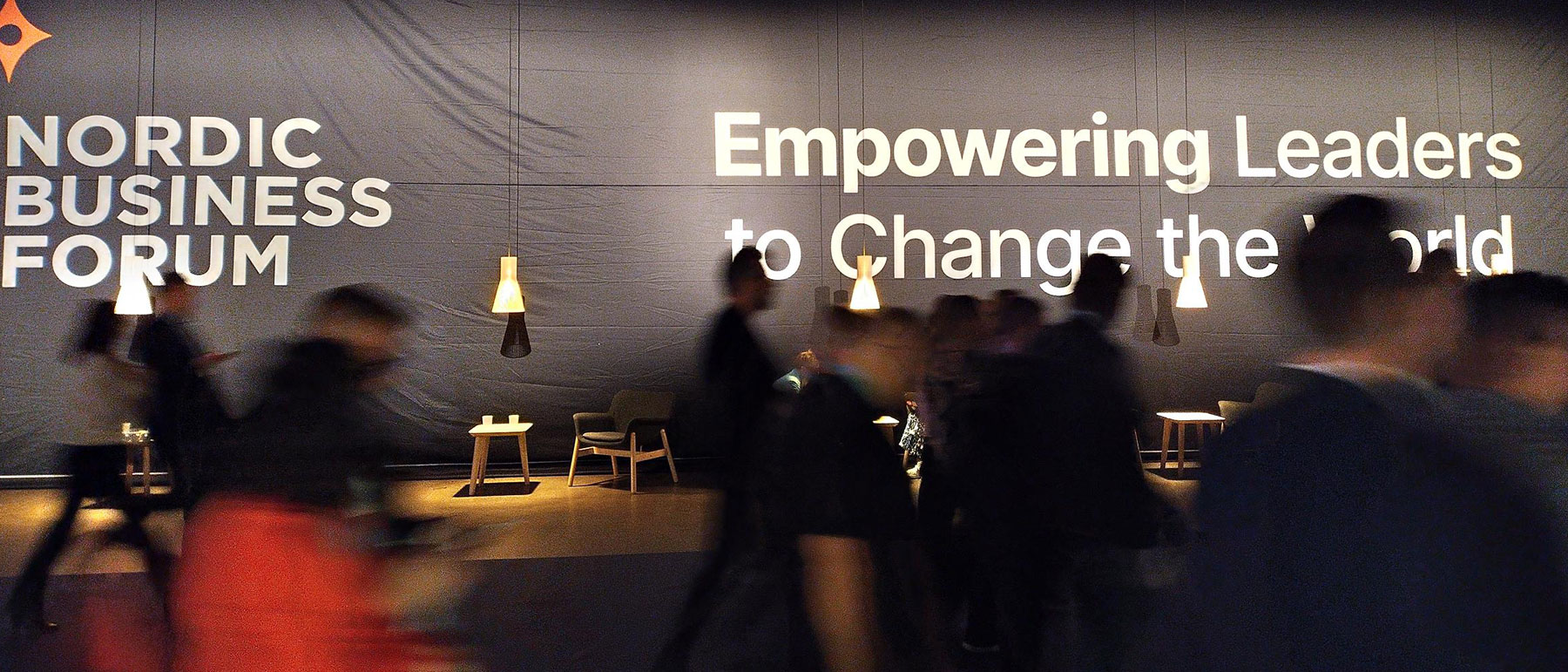
NBB HUB: Helsinki as Proof of Concept — Two Days, One Living Ecosystem
Helsinki as Proof of Concept: Two Days, One Living Ecosystem
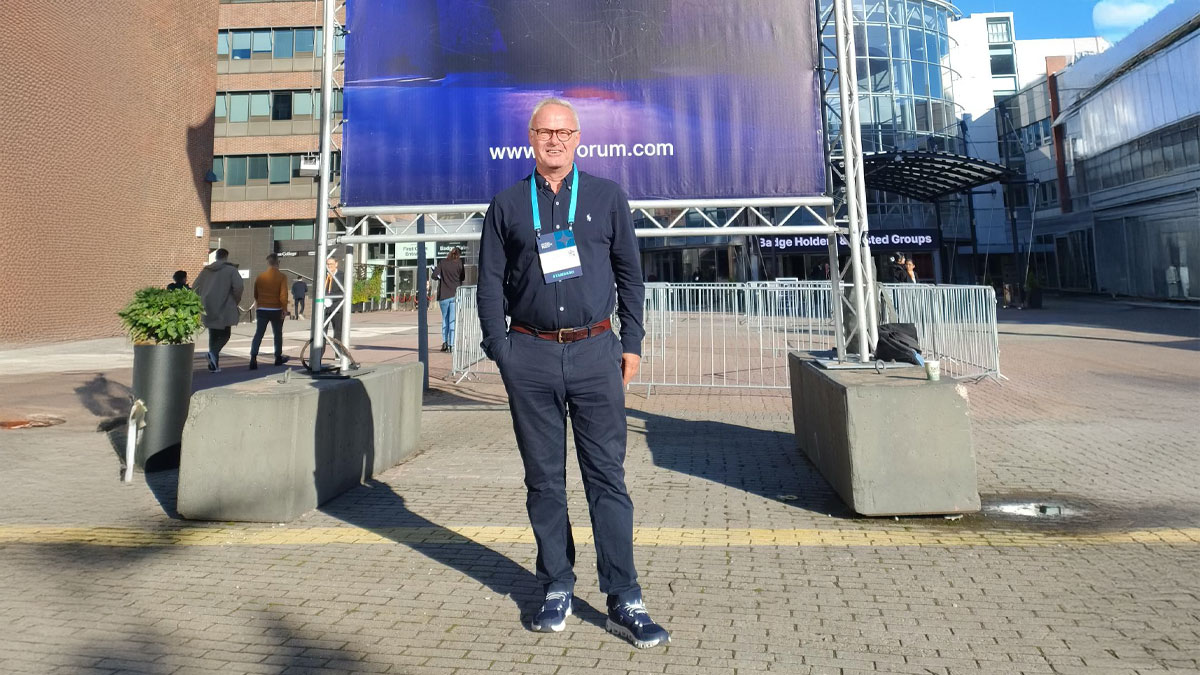
The Nordic Business Forum in Helsinki was much more than an event. It became the moment where I could truly put my methodology to the test.
Walk your talk: the ultimate test
With Add Business, I step in as a co-pilot. With Companyonwise, I always start from DNA Discovery — the process of uncovering what truly drives organizations. I apply that same logic to myself. The connection between Brussels and Tallinn is no coincidence; it’s a deliberate strategy — to build a living ecosystem that helps Nordic and Baltic companies enter Belgium, starting from their own DNA.
But this had to be more than just a strong narrative. It had to be proven — in practice, at a single event. I had two days. No team, no luxury of preparation. Only the Brella app — a matchmaking platform that connects people based on shared profiles and interests — and one belief: if this methodology worked, I would be able to assemble a functioning ecosystem in 48 hours.
Growth, innovation, and digitalisation: the driving force of the ecosystem
During the Nordic Business Forum, a mosaic of connections came together in just two days. The network included professionals from software development, leadership, talent acquisition, legal, sales, branding, and education. Names like Timo Kempanen (Growth Agency), Kai Lempinen (Appmore), Lasse Kukkonen (Leadership Coaching), Lise-Lotte Laane (Sorainen), Juha Qvick (SalesFrame), and Mari-Liis Ahven (Optimist Public) represented more than business functions — they became the building blocks of an ecosystem connecting technology, people, and markets.
The result was not a loose collection of conversations, but a coherent network of fourteen complementary experts — each contributing their own strength: growth, innovation, digitalisation, human development, branding, legal expertise, and academic insight. Together, they form the essence of what NBB HUB stands for: a multidisciplinary, international alliance where knowledge, network, and practice reinforce one another to create sustainable market access.
From markets to ecosystems: the bigger picture
When I founded NBB HUB, I — like many others — approached it through the lens of markets, data, and entry strategies: approaching companies, creating analyses, mapping out competition. Important, but incomplete. Modern businesses no longer operate in isolated markets, but in dynamic networks of collaboration and co-creation. This is even truer once those networks cross borders. Belgium is the perfect example: a country that seems complex at first glance, but whose diversity makes it a natural hub for European expansion.
Research confirms that business ecosystems — networks of organizations that cooperate and compete in the delivery of goods and services — are now critical for innovation, sustainability, and competitiveness (Espina-Romero et al., 2023).
But an ecosystem is much broader than just events. It includes universities and business schools (such as Vlerick, Solvay, and Antwerp Management School) that nurture talent and share knowledge; sector federations (like Agoria, Fevia, and essenscia) that represent their industries; and membership organizations (such as Voka and BECI) that unite thousands of companies. The art of internationalisation lies in knowing where these worlds intersect — and how to gain strategic access to them.
The human factor: DNA as a compass
This vision took shape for me last year when I met Lars-Erik Hion and Jana Kukk of Rethink on the same stage. Together, we mapped their organizational DNA — their authentic simplicity, their strength. That DNA became the foundation of their growth. Their story confirmed what I intuitively already knew: success in a new market doesn’t begin with data or strategy, but with identity. Companies that land successfully don’t come merely to find clients; they come to find partners who resonate with their DNA. That’s how sustainable ecosystems are built — from the inside out.
Theory becomes practice
The beauty of the NBB HUB narrative is that it is not based on theory to be tested later, but on real-time evidence. Helsinki became the proof of concept. I preach ecosystem thinking, I start from DNA Discovery, and I offer co-pilot guidance — and in Helsinki, I demonstrated that it works. In just 48 hours, I built a living ecosystem: fourteen professionals, six sectors, three countries. No spreadsheets, no reports — just practice that worked.
NBB HUB doesn’t operate from a distance but through proximity. Ecosystems are not static structures — they are living organisms. They grow, shift, and adapt. Their power lies in connection — exactly what Helsinki revealed.
References
- BCG Henderson Institute. Building Trust in Business Ecosystems. Boston Consulting Group, 15 September 2022.
- Espina-Romero, Laura C., et al. 7 Topics That Business Ecosystems Navigate: Assessment of Scientific Activity. Frontiers in Environmental Science 11 (2023).
- Rifa’i, A., Wibowo, A., & Kurniawan, A. Three Decades of Research in the Field of Business Ecosystem: A Bibliometric and Content Analysis. Cogent Business & Management 10, no. 2 (2023).

Ready to land in Belgium?
Discover how your company can land smoothly in Belgium — with a co-pilot who knows the terrain, the networks, and the fastest route to success.

Efficiency and Empathy: The Paradox of AI in Sales
Paradoxical Thinking as a Driver of Innovation
Paradoxical thinking invites us to embrace and combine apparent opposites into new insights, rather than choosing a single extreme (Lewis & Goldin 2015). By challenging participants not to choose between efficiency or empathy but to pursue both, a meaningful peer-learning atmosphere emerged: sales professionals shared concrete examples of how they balance AI with humanity.
1. The Productivity Paradox: Time Savings and Workload
AI promises time savings through automated prospecting, lead scoring, and reporting, but can increase workload as expectations and tasks multiply (Brynjolfsson & McAfee 2014). By setting clear boundaries with realistic KPIs and joint review sessions, teams can temper the productivity paradox and enhance job satisfaction.
2. Individual versus Organizational: Freedom and Control
Salespeople quickly discover convenient AI tools; organizations require governance, compliance, and data security (Mikalef et al. 2020). A paradoxical approach enables organizations to provide experimental space within clear policy frameworks, strengthening both innovation capacity and consistency.
3. Reach versus Value Creation: More Prospects and Deeper Relationships
AI increases the number of contact moments with prospects, but true customer value arises in personal follow-up and trust (Smith & Sprachman 2019). By refining segmentation criteria and defining measurable value metrics (e.g., Net Promoter Score), sales teams achieve both quantitative growth and qualitative customer satisfaction.
4. Preparation versus Authenticity: Data-Driven and Spontaneous
Data analysis and AI-supported scripts improve preparation for client conversations, but can make them feel artificial (Ransbotham et al. 2017). Paradoxical thinking encourages sales professionals to leverage AI-driven insights without losing their authentic voice, resulting in conversations that are both well-supported and genuinely human.
AI Makes Us More Human
By delegating routine tasks to AI, space is created for what distinguishes us: empathy, creativity, and judgment (Brynjolfsson & McAfee 2014). The real gain lies in combining digital intelligence with human connection, with AI serving as a catalyst for deeper customer relationships and innovation.
The Sales Professional of 2030
The future belongs to those who neither avoid AI nor rely on it blindly, but use it as an intelligent instrument to amplify fundamentally human talents. Only then can we create sustainable growth and meaningful customer relationships.
Bibliography
- Brynjolfsson, Erik, and Andrew McAfee. The Second Machine Age: Work, Progress, and Prosperity in a Time of Brilliant Technologies. New York: W. W. Norton & Company, 2014.
- Lewis, Michael, and Ian Goldin. “Paradoxical Leadership and Innovation.” Journal of Business Strategy 36, no. 2 (2015): 34–42.
- Mikalef, Patrick, Dimitrios Krogstie, Stephan Pappas, and Ole K. A. Mentz. “Investigating the Effects of Big Data Analytics Capabilities on Firm Performance: The Mediating Role of Dynamic Capabilities.” Information & Management 57, no. 2 (2020): 103–247.
- Ransbotham, Sam, David Kiron, Philipp Gerbert, and Martin Reeves. Reshaping Business with Artificial Intelligence: Closing the Gap between Ambition and Execution. Boston: MIT Sloan Management Review, 2017.
- Smith, Brian, and Michael Sprachman. “Human–AI Collaboration in Decision-Making.” Organizational Dynamics 48, no. 3 (2019): 100–109.
Cockpit Conversation with Gert van De Vijver: How One Tool Became the Cockpit of Growth
In the Cockpit
As a former operations manager at Alcatel and advisor to countless SMEs, he kept seeing the same pattern: strategies that never get executed, meetings without outcomes, and action points that disappear into thin air.
At forty, he shifted to interim management; at fifty-two, he made the leap to full-time entrepreneurship. His motivation: to bundle proven methodologies into one practical tool that turns meetings into a strategic engine.
The DNA of Too Doo: Focus on Meetings
Too Doo is not your typical project management platform. It deliberately starts from meetings to connect all facets of business operations. By preparing each meeting structurally, facilitating it tightly, and following up consistently, teams gain the tools to translate expectations into concrete actions and measurable results.
What does that mean in practice?
- Clear agendas and defined roles.
- Recording of decisions, action owners, and deadlines.
- Linking back to goals, KPIs, and strategic themes.
- One single source of truth instead of scattered notes, spreadsheets, and Teams channels.
From Chaos to Control
“Our ideal customer lives in chaos,” says Gert. Think of growing SMEs drowning in tools and scattered agreements. Too Doo centralizes that chaos, so the management team no longer needs to dig through eight different apps to keep the strategic line in sight. The result: less friction, more focus — and above all, visible progress.
AI as the Silent Co-Pilot
AI in Too Doo is deliberately positioned as an intelligent assistant, not a flashy gimmick. Think of:
- Automatic summaries of meeting transcripts.
- Monitoring of actions and early detection of deviations.
- Insight into where time actually goes (strategy vs. operations) — without losing human interpretation.
This allows a CEO to see, at a glance, where the team’s attention is going and make targeted adjustments.
From Freemium to Commitment
After dozens of demos each year with a conversion rate of around 10%, Gert realized: a demo alone doesn’t create lasting adoption. That’s why Too Doo now offers a freemium model with a diagnostic conclusion: after the trial period, users receive an in-depth analysis of their meeting behavior. Those “aha moments” form the foundation for a well-grounded collaboration — driven by data and behavior, not gut feeling.
Scaling Without the Consultancy Culture
The ambition: to scale sustainably without drifting into an expensive consultancy model. The strategy follows three tracks:
- Licenses as the backbone: software-first, supported by clear implementation standards.
- Implementation partners: an ecosystem of specialists helping organizations adopt the tool effectively.
- Methodical AI tools: built-in support for frameworks such as OGSM, RACI, or ISO — ensuring teams remain consistent as they grow.
In this way, Too Doo stays true to its core: using technology to strengthen collaboration, not replace people.
Lessons from the Cockpit
Meeting discipline is not an annoying obligation, but a lever for progress. Gert combines personal experience with academic insight to build a platform that seamlessly connects strategy and execution.
The First Customers: Effectuation in Action
The very first customers came through effectuation. Gert started with what he already had — his network, knowledge, and interim projects — and experimented with small-scale pilots among trusted contacts. By quickly delivering minimum viable implementations and keeping feedback cycles short, he built a foundation of enthusiastic references.
Growing Beyond Chance: Three Strategies
- Network expansion through referrals
Each pilot is turned into a case study and shared within industry groups to build credibility. - Differentiated product-service mix
After the freemium phase come modular add-ons such as advanced AI analyses and targeted workshops — creating clear upsell and cross-sell paths. - Partner ecosystem
By collaborating with specialized consultants and software vendors, Too Doo gains co-marketing opportunities and access to new segments.
With this approach, Too Doo moves beyond the randomness of early wins and builds a deliberate growth engine.
Conclusion
What if meetings were no longer seen as “lost time,” but as the cockpit for direction, focus, and execution? That’s the promise of Too Doo — one place where decisions, actions, and strategy converge, allowing teams to make progress that can be seen, measured, and celebrated.
Want to learn more or start a pilot?
Visit addbusiness.be or schedule an introductory call with Gert van De Vijver.
References (Selection)
- Davenport, T. H., & Harris, J. G. (2007). Competing on Analytics: The New Science of Winning. Harvard Business School Press.
- Kaplan, R. S., & Norton, D. P. (2008). The Execution Premium: Linking Strategy to Operations for Competitive Advantage. Harvard Business Press.
- Leonardi, P. M. (2014). Social Media, Knowledge Sharing, and Innovation: Towards a Theory of Communication Visibility. Information Systems Research, 25(4), 796–816.
- Mintzberg, H. (1979). The Structuring of Organizations. Prentice-Hall.
- Sarasvathy, S. D. (2001). Causation and effectuation: Toward a theoretical shift from economic inevitability to entrepreneurial contingency. Academy of Management Review, 26(2), 243–263.
- Vargo, S. L., & Lusch, R. F. (2004). Evolving to a New Dominant Logic for Marketing. Journal of Marketing, 68(1), 1–17.
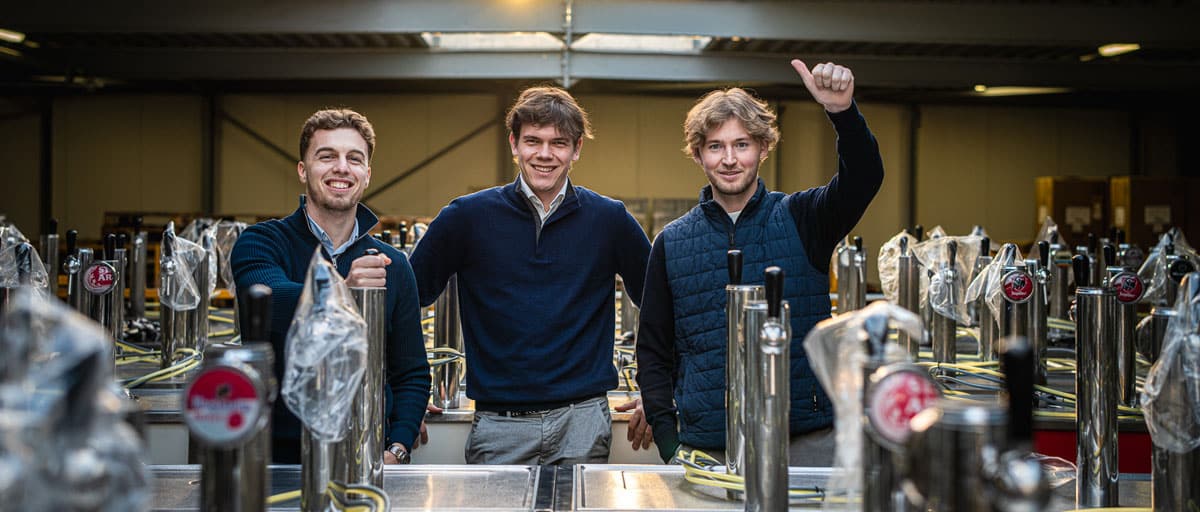
Groeien door overname: een Leuvense cockpit
Young, focused, and unstoppable
Their engine? DNA as a filter: they only select companies that match their values. Fun, team spirit, tangible impact, and local relevance are the criteria steering every decision.
From coincidence to strategy
Is it coincidence that these three companies ended up in their hands? Not at all.
Toon Missotten: “In the process, we looked at the same criteria: region, traditional businesses (instead of tech companies), our own DNA. And fun is an important one. If it doesn’t give us energy, we don’t do it.”
Paintball Leuven was their learning ground, ’t Galetje the first real acquisition, followed by Brabanthal and Belgotap through networking and proactive outreach. The pattern shows how they deliberately translate their background and values into choices.
At the family kitchen table, this mentality was instilled. One of the fathers is an entrepreneur himself, and the stories shared there—about taking risks, seizing opportunities, and building something together—still form the foundation today.
A friendship team as foundation
The trio is no random team. Their roots lie in childhood friendship, shared studies, and a common entrepreneurial outlook.
Toon Missotten: “We know each other inside out. We’re not afraid to challenge or correct each other. That makes us stronger and faster in decisions.”
That trust is their buffer. It gives them the courage to run multiple companies simultaneously.
Growth challenges and further growth
Belgotap – declining beer market
The beer market is shrinking, and Belgotap is indirectly affected.
Toon Missotten: “Being a small team open to growth allows you to pivot flexibly and seize new opportunities with the resources you already have. That’s a huge advantage compared to cumbersome multinationals that first need consensus among decision-makers.”
Further growth: Beyond consolidating our market position, we’re exploring opportunities in the broader beverage and logistics market, where untapped potential exists to leverage our expertise and services.
’t Galetje – capacity limits
The ice cream shop is running at full speed but is slowly hitting physical limits.
Toon Missotten: “We’re almost at the maximum of what we can do with this team and this location.”
Further growth: requires removing the current physical and staffing constraints. There are certainly opportunities—renovating the shop could increase capacity in the long run.
Brabanthal – renewal
The event location has a strong reputation and is reinventing itself.
Toon Missotten: “We want to attract more public events again. At the same time, we want to refresh the image with more digitalization and flexibility.”
Further growth: lies in attracting more public events and strengthening the image through digitalization and flexibility to win ‘new’ customers. Again, customer experience is central.
People as the key
Their employee selection is sharp and decisive.
Toon Missotten: “Those who work with us show they can come up with their own solutions. If someone brings three proposals for a problem, we know it’s good.”
Autonomy and resilience are the decisive criteria.
Growth & ambition
Their growth and ambition are not about quick profits but about consolidation and impact.
Toon Missotten: “We want to show that you can transform classic companies. We’re not after short spikes but sustainable growth.”
Academically underpinned entrepreneurship
Their cockpit story directly connects to insights from literature:
- Acquisition entrepreneurship leverages succession issues in SMEs as a growth engine (Drexler & Clarke, 2025).
- Jobs-to-be-Done helps formulate propositions that address real customer needs (Christensen, 1997).
- Team fit and resilience are crucial for scalability and innovation (Blank, 2013).
- Network expansion requires conscious choices rather than hockey-stick thinking (Blank, 2013).
Conclusion
Their path is not the usual start-up hype. It is the choreography of acquisition, renewal, and DNA. A cockpit with three engines, manned by entrepreneurs who turn tradition into scalable growth.
The next step? Developing new first customers and moving beyond the familiar network. Not by chance, but by deliberately building an ecosystem of partners, clients, and connections that reinforce one another. That is where their real growth potential lies: beyond their own circle, toward a broader market that recognizes and embraces their energy and approach. But always with fun at the core 😊
References
- Blank, S. (2013). The Four Steps to the Epiphany: Successful Strategies for Products That Win. K&S Ranch.
- Christensen, C.M. (1997). The Innovator’s Dilemma. Harvard Business School Press.
- Drexler, J., & Clarke, T. (2025). Entrepreneurship Through Acquisition in the Digital Age: Exploring Strategies for Sustainable Growth. SSRN Working Paper.

Cockpit Conversation with Marco Reijntjens – Gaining Grip on People, Customers, and Results
In the Cockpit
Marco has a technical background but entered the field through account management and sales training. Today, he guides organizations in the Netherlands and beyond with methods such as Clients for Life, Value Based Partnerships, and Fresh Eyes Reviews. His starting point: customer expectations define value. That’s what you need to gain grip on.
Belgium – Netherlands: Two Airspaces
We quickly noticed the cultural differences. In Belgium, sales management often remains informal, sometimes even amateurish in its approach. In the Netherlands, the maturity is clearly higher: more structure, more professionalism.
Still, both markets face the same issue: how do you ensure sales and account management are not just an individual trick, but an organizational capability (Workman et al., 2003).
Methodologies That Provide a Handhold
Clients for Life: Originally developed in the U.S. for large enterprises with complex stakeholder structures. Workshops in which both teams make expectations explicit and set priorities.
Value Based Partnerships: A derivative for SMEs and less complex customer relationships. Here a one-on-one conversation suffices, but the principle remains: value starts with explicitly stated expectations.
Both models align with academic research emphasizing that customer expectations are dynamic and must be managed proactively to retain loyalty (Homburg et al., 2010).
Fresh Eyes Reviews – Looking Through the Customer’s Lens
Marco elaborated on the Fresh Eyes Reviews: qualitative customer interviews at senior level, often with strategically important clients. They go further than NPS scores or standard satisfaction surveys. Here, the customer decides what matters.
The insights are often confronting: sometimes it turns out decision-makers hardly have contact with their supplier, or that expectations were never explicitly discussed. The result: concrete improvement actions and a sharper picture of what is truly valuable in the collaboration.
Christensen’s “Jobs to be Done” theory resonates strongly here: customers “hire” a supplier to make progress in their own context (Christensen et al., 2016). Only by explicitly understanding those jobs can a supplier sustainably add value.
AI as Co-Pilot
Innovation was also on the table. Marco is currently developing CCO Insights, an AI-driven tool that collects feedback on won and lost proposals through short chat conversations.
The data is translated into dashboards with patterns and recommendations. This ties in with my own experience: AI accelerates the analysis of conversations and reports. It makes commercial learning not only faster but also more objective.
Research shows that AI in account management mainly adds value in analysis and decision-making tasks, as long as human interpretation and relationships remain central (Davenport et al., 2020).
Conclusion – Setting Course with Tenacity
Tenacity lives up to its name: persistently working on customer relationships, not with loose tips & tricks, but through processes that make expectations measurable and discussable. From the cockpit, I see the same focus I apply at Add Business: strengthening human relationships by systematically working on trust, value, and control.
And at the same time, I keep learning. Because alongside my role at Add Business, as co-founder of Companyonwise and the NBB HUB, I see the value of combining methodologies and tools. Marco and I may start from different angles, but we land at the same destination: helping organizations grow sustainably—with grip on what truly matters.
References
Christensen, C. M., Hall, T., Dillon, K., & Duncan, D. S. (2016). Competing Against Luck: The Story of Innovation and Customer Choice. Harper Business.
Davenport, T. H., Guha, A., Grewal, D., & Bressgott, T. (2020). How artificial intelligence will change the future of marketing. Journal of the Academy of Marketing Science, 48(1), 24–42.
Homburg, C., Müller, M., & Klarmann, M. (2010). When should the customer really be king? On the optimum level of salesperson customer orientation in sales encounters. Journal of Marketing, 74(2), 55–74.
Workman, J. P., Homburg, C., & Jensen, O. (2003). Intraorganizational determinants of key account management effectiveness. Journal of the Academy of Marketing Science, 31(1), 3–21.

Cockpit Conversation with Wouter – From Cold Emails to Warm Conversations
In the cockpit
In this conversation, I sat next to Wouter, an entrepreneur who built a company with nineteen employees and more than a hundred clients in just four and a half years. His mission: to unburden sales departments with campaigns that look surprisingly simple, but are highly effective.
The Leap of Faith
Wouter started in the middle of the COVID period. While many companies saw their sales grind to a halt, he built an alternative. Not call centers or anonymous lead factories, but personal, hyper-targeted emails sent in the name of the account manager.
The idea arose almost by coincidence but turned out to be gold: 40% response rates, up to 70% open rates, and above all – warm contacts that the account manager could personally follow up on.
Research confirms this: personalized outreach significantly outperforms generic campaigns because relevance and timing are crucial factors in breaking through commercial noise (Bhatia & Yetton, 2020).
The Flywheel of Growth
His approach works best with traditional companies, where sales often still run “on gut feeling” and with little structure.
That is where Wouter and his team make the difference: manually built lists, carefully chosen words, and always a human tone. No generic messages, but a first contact that inspires trust.
Trust is the key here. Studies show that the first minutes of a customer relationship disproportionately affect the course of collaboration (Cialdini, 2016). That makes such a first email not a detail, but a flywheel moment.
Two Worlds, One Cockpit
What stays with me from our conversation is how his story aligns with what I do at Add Business. Where my focus is on improving the actual client conversation – the moment where trust is made or broken – Wouter ensures that there are more conversations in the first place. Two sides of the same cockpit: he turns on the radar, I help with the landing.
Lessons from the Sky
- Wouter shared how he learned that “wanting to be liked” can sometimes stand in the way of growth.
- Making choices, daring to ask for prices, while staying true to the belief that you cannot outsource the first contact – that is what sets him apart.
Interestingly, this aligns with research on assertive selling: salespeople who set clear boundaries experience more sustainable customer relationships than those who focus mainly on being liked (Schwepker & Good, 2021).
Conclusion – Charting a Course with Complementary Strength
In the cockpit of commercial growth, it is not the technology or the channel that makes the difference, but the way people connect.
Wouter shows that cold acquisition can become warm again – if you approach it with humanity and intelligence.
References
Bhatia, A., & Yetton, P. (2020). Personalization in B2B sales outreach: Effects on engagement and response rates. Journal of Business Research, 116, 375–386.
Cialdini, R. (2016). Pre-suasion: A revolutionary way to influence and persuade. Simon & Schuster.
Schwepker, C. H., & Good, D. J. (2021). Improving sales performance through ethical assertiveness. Journal of Business & Industrial Marketing, 36(13), 76–88.

Cockpit Conversation with Ines Feytons Co-founder Nascent
In the cockpit
That’s what I discussed with Ines Feytons, cofounder and CEO of Nascent. After six years as a legal consultant at Deloitte, she chose entrepreneurship. Her mission: helping founders find the right co-pilot so that teams can fly further than the first thermal lift.
The leap from the runway
“It was now or never,” says Ines. In April, together with her cofounders, she launched Nascent, a matchmaking platform that helps founders find a cofounder—or, conversely, step into an existing team. She saw the problem up close: team fit is underestimated—and that is precisely where Nascent wants to make the difference.
The platform: balancing supply and demand
Two sides, one goal: better matches.
Demand side: start-ups actively looking for a cofounder.
Supply side: often experienced professionals eager to embark on entrepreneurship, without their own idea, ready to step in.
The first users often come from accelerator programs, where the importance of a strong cofounder becomes immediately visible. On the other side: professionals who want to apply their experience in a new adventure. Active seekers, not casual browsers.
Navigating a complex airspace
Ines experiences the Belgian ecosystem as fragmented: there are many valuable initiatives, but players often work within their own programs and communities. Referrals between initiatives occur less spontaneously than in the Netherlands, where collaboration emerges more easily. On top of that, the geographic reality plays a role: Flanders and Wallonia each have their own networks and funding structures. This makes the landscape rich but sometimes less transparent for those navigating through it.
Internationally, she sees opportunities, especially in Scandinavia, where the human side of entrepreneurship takes center stage. Partners remain crucial: without a ground crew, there’s no safe landing.
Flying beyond the first customers
The biggest challenge is awareness: many founders realize too late that their greatest risk lies in the collaboration itself.
That’s why Nascent relies on partners who help carry the story and integrate the platform into their communities.
- Focus for the coming months (as Ines sees it):
- Setting up and testing international partnerships.
- Further refining the target audience and sharpening positioning.
- Developing a recurrent check-in for teams so collaboration becomes measurable and discussable.
Lessons from turbulence
“We should have probed willingness-to-pay more quickly. Enthusiasm didn’t always turn into a paying user,” Ines reflects.
That is entrepreneurship in unexplored airspace: iterating, adjusting, and staying on course. Impact over volume remains the guiding principle.
Conclusion – choosing course with the right crew
Nascent is more than ‘Tinder for cofounders’: it makes the often underestimated factor of human fit tangible and discussable. From the cockpit I hear in Ines the same pattern I see in many growth companies: technology and market are necessary, but without the right crew you won’t get past the first turbulence.
What stays with me from the conversation with Ines: clear choices, sober measurement, and smart use of partners—that’s how you climb safely.